Anglo-Portuguese Alliance: still active, and since 1373
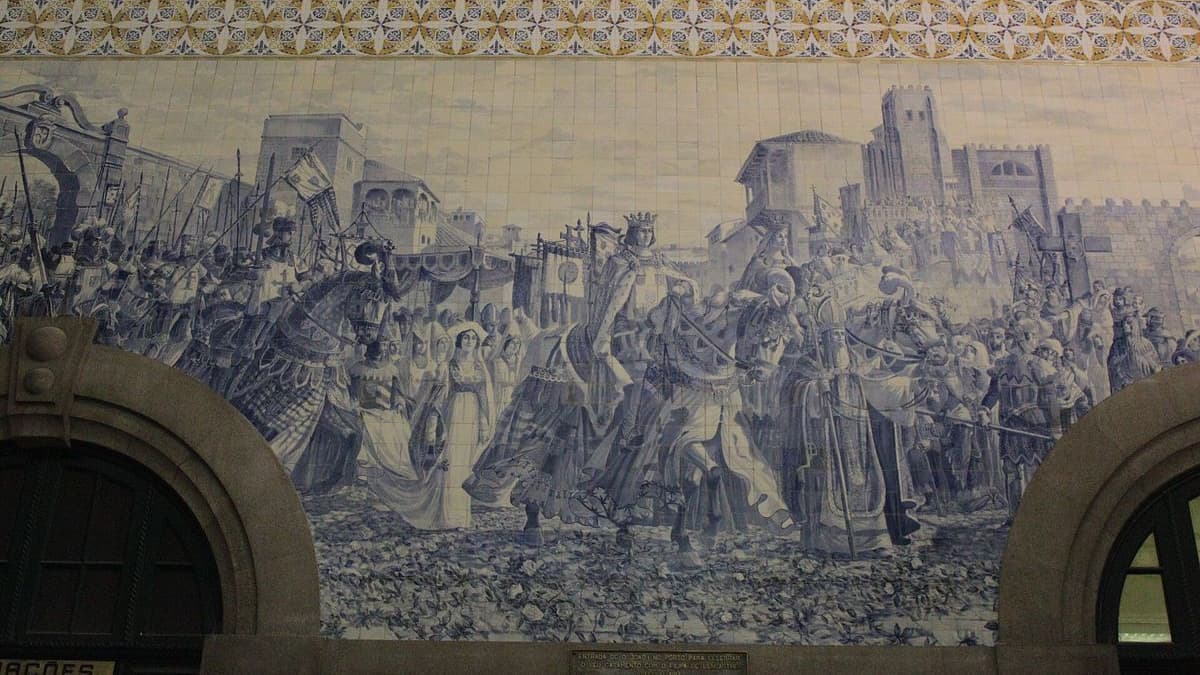
Yes. The alliance between Portugal and England (now the United Kingdom) dates from the Treaty of London of 16 June 1373 and has never been revoked. Portugal's Presidency calls it the longest diplomatic alliance still in force anywhere in the world. Britain last invoked it formally in 1943, to ask for bases in the Azores, and both heads of state celebrated its 650th anniversary in London in June 2023.
Why would this matter to you? The new Portuguese citizenship test is expected to cover "history", and the law does not list which events. Our guide to Portuguese history for the test explains how to study a subject with no fixed syllabus. The alliance is a gift for anyone who grew up with British or American textbooks: you already know half of these events, from the other side. This page gives you the Portuguese names and dates.
- 1373: Treaty of London, signed by Edward III and the Portuguese king Fernando. A smaller agreement at Tagilde in 1372 came first.
- 1386: Treaty of Windsor, after the Portuguese victory at Aljubarrota. In 1387 King João I married Philippa of Lancaster.
- 1890: the British Ultimatum, the alliance's worst crisis. It survived.
- 1943: Britain cited the 'ancient alliance' to obtain facilities in the Azores, while Portugal stayed neutral.
When did the Anglo-Portuguese Alliance start?
In 1373, though the first step came a year earlier. On 10 July 1372, at Tagilde in northern Portugal, King Fernando agreed military support against Castile with envoys of John of Gaunt, Duke of Lancaster and son of Edward III. On 16 June 1373 the kings themselves signed a treaty of "peace, friendship and alliance" in London. The original is held today by the UK National Archives.
So when a Portuguese question says "the oldest alliance", the year it wants is 1373. That is also why the 650th anniversary fell in 2023.
Why did Portugal and England become allies?
Because they shared an awkward neighbour. In the 14th century England was fighting France in the Hundred Years' War, and Castile, the large kingdom next to Portugal, was on the French side. For Portugal, Castile was the threat on the border; for England, it was a navy helping the enemy. A friend at the other end of the Iberian Peninsula suited both.
There was a family reason too. John of Gaunt had married a daughter of the King of Castile and claimed the Castilian crown for himself, so he wanted a foothold in the Peninsula. His family runs through every step of this story: his envoys negotiated Tagilde, and his daughter would become queen of Portugal.
The pattern that follows is the useful part for the test. Whenever Portugal faced a dangerous continental neighbour — Castile, later Spain, later Napoleon's France — it turned to England. Two seafaring countries that rarely wanted the same land made unusually durable partners.
What was the Treaty of Windsor?
A renewal, signed on 9 May 1386 by Richard II and the new Portuguese king, João I. The context is the one Portuguese school history never skips. After a two-year succession crisis, João defeated Castile at Aljubarrota in August 1385, with English archers in his army, and founded the Aviz dynasty. He needed a powerful friend who would recognise him, and Windsor made the alliance a perpetual league of mutual help.
If you want the full story of 1383–1385, it is in our page on the Portuguese dynasties. For the test, the order is enough: 1385, 1386, 1387.
Who was Philippa of Lancaster?
John of Gaunt's daughter, and a granddaughter of Edward III. She married João I in Porto in 1387 and became queen of Portugal. In Portuguese she is Filipa de Lencastre, and that is the name a test will use. Her sons include King Duarte and Prince Henry the Navigator (Infante D. Henrique), the figure at the start of the Portuguese discoveries. The poet Camões called that generation "ínclita", illustrious, and you will meet the phrase Ínclita Geração in Portuguese texts.
What happened to the alliance after the Middle Ages?
It kept coming back whenever one side needed the other. These are the moments a Portuguese history question is most likely to touch:
| When | What happened | Portuguese term to recognise |
|---|---|---|
| 1661 | Catherine of Braganza marries Charles II; Tangier and Bombay go to England as part of her dowry | Catarina de Bragança |
| 1703 | English woollens enter Portugal, Portuguese wine pays lower duty in England — the start of port's British market | Tratado de Methuen |
| 1807–1811 | Napoleon invades Portugal for refusing to close its ports to Britain; Wellington's Anglo-Portuguese army drives the French out | Invasões francesas, Guerra Peninsular |
| 1890 | Britain forces Portugal to give up its claim to the land between Angola and Mozambique | Ultimato britânico, Mapa cor-de-rosa |
| 1916 | At Britain's request Portugal seizes German ships in its ports; Germany declares war in March | Primeira Guerra Mundial |
| 1943 | Britain obtains facilities in the Azores; Portugal stays neutral | Açores |
The Napoleonic chapter has its own page: why the Portuguese court moved to Brazil. The Ultimatum is covered with the rest of the 19th century in our page on liberalism and the constitutional monarchy.
Did the 1890 Ultimatum end the alliance?
No. On 11 January 1890 Britain demanded that Portugal withdraw from the territory its "Pink Map" claimed across southern Africa, and Portugal gave in. The humiliation fed the republican movement that ended the monarchy in 1910, and the song written in protest, A Portuguesa, is now the national anthem — see the national symbols. But neither country renounced the treaties. In English-language memory the Ultimatum is a footnote; in Portugal it is a national wound. Expect the Portuguese view.
What did the alliance mean in the Second World War?
Portugal stayed neutral, in agreement with London, and kept saying that neutrality was compatible with the alliance. In October 1943 London asked for facilities in the Azores to protect Atlantic shipping, and Lisbon agreed. When Salazar reported it to the National Assembly on 26 November 1943, the note he read out named the ground for the request:
O Govêrno de S. M. no Reino Unido, baseando-se nesta antiga aliança, pediu agora ao Govêrno Português lhe conceda certas facilidades nos Açôres, que o habilitarão a melhor proteger a navegação mercante no Atlântico.
In plain English: His Majesty's Government, relying on the ancient alliance, asked for facilities in the Azores. The same note called the arrangement "purely temporary" and promised that British forces would leave at the end of the war. Nearly six centuries after 1373, a government was still citing the treaty as its legal basis.
So is it still in force today?
Yes. In June 2023 President Marcelo Rebelo de Sousa travelled to London for the ceremony marking 650 years of the Tagilde and London treaties, held with King Charles III at the Queen's Chapel. Today the alliance lives mostly in diplomacy and ceremony rather than in military clauses, but both states still treat it as in force.
Mix-ups that cost points
- Windsor is not the start. London 1373 is; Windsor 1386 renewed it.
- Philippa was not an English queen. She was a duke's daughter who became queen of Portugal.
- Portugal did not fight in the Second World War. It fought in the First, from 1916, and stayed neutral in the Second.
- "England" and "United Kingdom". Portuguese questions often say Inglaterra for the medieval period. Both mean the same ally.
What might a question look like?
A fair question has one right answer and does not depend on interpretation. Something like: «Com que país mantém Portugal a aliança diplomática mais antiga ainda em vigor?» — with Spain, France, Brazil and the United Kingdom as options. Spain and France are traps for people who think of neighbours, Brazil for people who think of language. The answer is the United Kingdom. Other safe bets: the year 1373, the name Filipa de Lencastre, what the Methuen Treaty traded (wine for cloth) and why 1890 matters for the anthem. Skip the clauses, the ambassadors and the minor treaties that reconfirmed the alliance over the centuries.
What to do next
If you can place 1373, 1385, 1640 and 1890 in order, you have the backbone of Portuguese history. The free history flashcards help you fix the rest, and the free practice quiz shows you in a few minutes whether history is still where you lose points.
Sources