The most famous Portuguese writers: 7 names to know
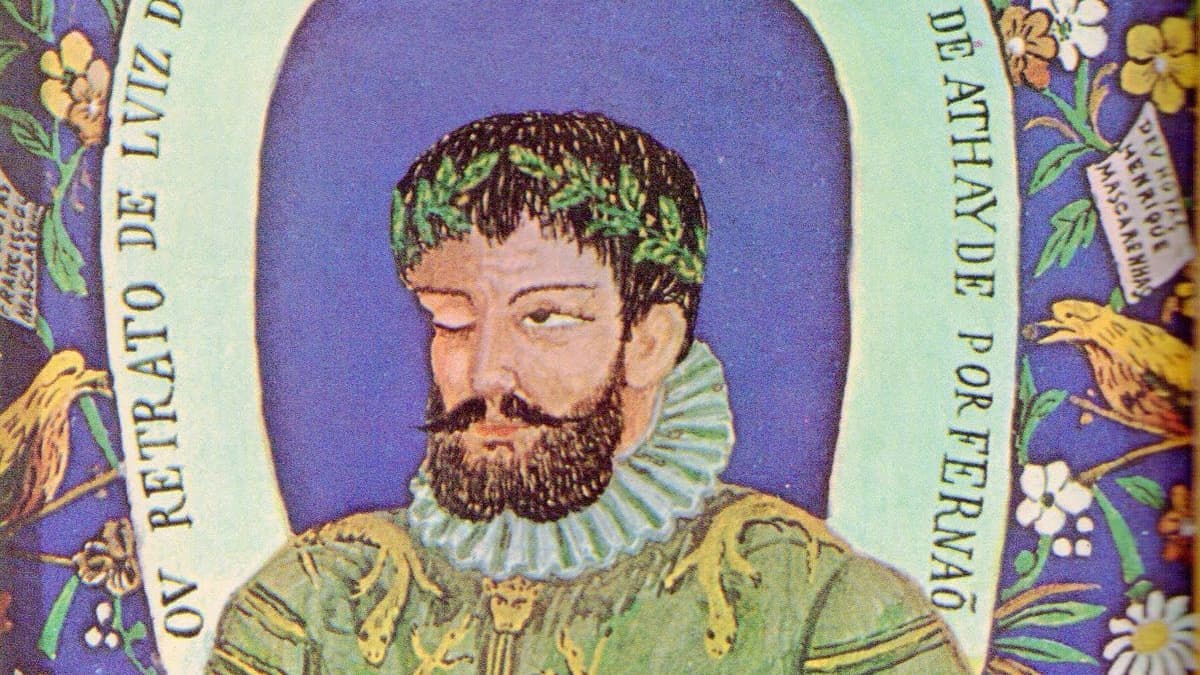
Ask someone abroad to name a Portuguese writer and you will usually get one name: Fernando Pessoa, or perhaps José Saramago. For a Portuguese citizenship test it pays to know seven, each tied to one book: Luís de Camões (The Lusiads), Gil Vicente (the first great playwright), Almeida Garrett (Romanticism), Eça de Queirós (The Maias), Fernando Pessoa (the poet who wrote as several people), Sophia de Mello Breyner Andresen (poetry of the sea and of freedom) and José Saramago, the only Portuguese winner of the Nobel Prize in Literature, in 1998.
The nationality law asks candidates to know «Portuguese culture» without naming any books. For the test itself, start with our guide to the new Portuguese citizenship test; for the culture theme as a whole, see Portuguese culture for the citizenship test. This page narrows it to the writers.
- Saramago (1998) is Portugal's only Nobel laureate in literature. Pessoa never won it — he is the wrong answer people pick most.
- Camões wrote The Lusiads (1572). Portugal's national day, 10 June, carries his name by law.
- You will see the names in Portuguese: Os Lusíadas, Os Maias, Mensagem. Learn them in that form.
Who are the most famous Portuguese writers?
| Writer | Dates | Remember for | Title in Portuguese |
|---|---|---|---|
| Luís de Camões | c. 1524–1580 | The national epic, about Vasco da Gama's voyage to India | Os Lusíadas |
| Gil Vicente | c. 1465–c. 1536 | Founding Portuguese theatre with short satirical plays | Auto da Barca do Inferno |
| Almeida Garrett | 1799–1854 | Romantic writer and liberal politician | Frei Luís de Sousa |
| Eça de Queirós | 1845–1900 | The great 19th-century novelist | Os Maias |
| Fernando Pessoa | 1888–1935 | Writing under several invented poets, the heteronyms | Mensagem |
| Sophia de Mello Breyner Andresen | 1919–2004 | Poetry and children's stories; first woman to win the Prémio Camões | A Menina do Mar |
| José Saramago | 1922–2010 | Nobel Prize in Literature, 1998 | Ensaio sobre a Cegueira (Blindness) |
Why these seven, when there is no official reading list? Because the Portuguese State has, in effect, made its own. The law on the National Pantheon says its honours exist to keep alive the memory of citizens who stood out in, among other things, «literary creation», and only Parliament can grant them. Garrett, Eça and Sophia have been laid to rest in the Pantheon in Lisbon. Since 2016 the same law also gives Pantheon status to the Jerónimos Monastery, where Camões and Pessoa have their tombs. Add Saramago for the Nobel and Gil Vicente for theatre, and you have the list.
Did Fernando Pessoa win the Nobel Prize?
No. This is the literature question people get wrong most often in our practice quiz: about four in ten answer it wrongly, and Pessoa is the favourite wrong answer. He is the best-known Portuguese writer abroad, which is exactly why he is a good trap. The only Portuguese laureate is José Saramago, in 1998. The 2026 prize went to the Canadian poet Anne Carson, so the answer still stands. Our analysis of the questions people miss most has the numbers.
What makes Pessoa special is something else. He wrote as if he were several different poets, each with a name, a life story and a style of his own — Alberto Caeiro, Ricardo Reis and Álvaro de Campos are the main three. Portuguese calls them heterónimos. The only book of Portuguese poetry he published in his lifetime was Mensagem (1934). He died in 1935, and in 1985 his remains were moved to the Jerónimos Monastery.
Camões and 10 June: what the law says
Os Lusíadas (1572) is the national epic: ten cantos that tell Vasco da Gama's sea voyage to India and, through it, the history of Portugal. If you have read about the Portuguese Age of Discovery, you already know the story the poem tells.
10 June is a public holiday, and its official name, fixed by decree, is «Dia de Portugal, de Camões e das Comunidades Portuguesas» — Day of Portugal, of Camões and of the Portuguese Communities. Tradition links the date to the day Camões died; the law gives the name, not the reason. A question asking whose name the holiday carries has a legal answer. A question asking why that day has a historical one.
The playwright, the Romantic and the novelist
Gil Vicente wrote plays for the royal court in the early 1500s. The one Portuguese schoolchildren read is the Auto da Barca do Inferno («The Boat to Hell»), where the dead arrive at a quay and must board either the boat to Hell or the boat to Glory — a satire of the society of his day.
Almeida Garrett brought Romanticism to Portuguese literature and fought on the liberal side in the civil war of the 1830s. His best-known play is Frei Luís de Sousa.
Eça de Queirós is the great novelist of the 19th century. Os Maias (1888) follows a wealthy Lisbon family in decline, and with it a country that felt it was falling behind Europe. He is also the most recent writer to enter the Pantheon: Parliament voted the honour in 2021, and after a court dispute with some of his descendants his remains were moved there in January 2025.
The 20th century: Sophia and Saramago
Sophia de Mello Breyner Andresen is the poet of the sea, of light and of freedom, and the author of children's stories such as A Menina do Mar («The Girl from the Sea»). In 1999 she became the first woman to receive the Prémio Camões, the main literary prize of the Portuguese-speaking world, and in 2014 Parliament granted her Pantheon honours.
José Saramago grew up in a family of farm workers and only became a well-known novelist after fifty. In English he is best known for Blindness (Ensaio sobre a Cegueira, 1995); in Portugal, Memorial do Convento (1982), set around the building of the Mafra convent, is the one studied at school.
- 1572Camões publishes Os Lusíadas.
- 1888Eça publishes Os Maias; Pessoa is born.
- 1934Pessoa publishes Mensagem.
- 1998Saramago wins the Nobel Prize in Literature.
- 2025Eça de Queirós is moved to the National Pantheon.
Do you need to read the books?
Not for a multiple-choice test. What you need is the link between a name, a title, a century and the reason the writer is remembered — one line each, as in the table above. Leave aside literary movements with technical names and long lists of living authors; a question with one right answer asks who wrote what and who won which prize.
If you want to read one thing for the language, try a short story by Sophia or a few poems from Mensagem. Both are short, and both are read in Portuguese schools.
Where to go next
Writers are only one part of the culture theme. The rest — the twelve Portuguese entries at UNESCO and the full Pantheon criteria — is in our guide to the culture theme, and the free culture study cards sum up the Pantheon rules on one page.
Once you can match all seven names to their books, the free practice quiz will show you in a few minutes whether culture is still where you lose points — and whether the Nobel question still catches you.
Sources
- Lei da Nacionalidade (Lei n.º 37/81), artigo 6.º, n.º 1, alínea c)
- Lei do Panteão Nacional (Lei n.º 28/2000, de 29 de novembro), artigos 2.º a 4.º
- Lei n.º 14/2016, de 9 de junho (segunda alteração à Lei n.º 28/2000), artigo 1.º — Panteão Nacional nos Jerónimos, na Batalha e em Santa Cruz
- Decreto-Lei n.º 20-A/2016, de 27 de abril (Dia de Portugal, de Camões e das Comunidades Portuguesas)
- Código do Trabalho (Lei n.º 7/2009), artigo 234.º (feriados obrigatórios)